Water-damaged drywall repair
Basement Water Damage Repair in Streator, IL
Basement water damage repair in Streator begins somewhere other than the wall. Water-damaged drywall only gets fixed for good after the water quits coming in. Rebuild sooner and you buy the same wall twice.
First
Before any drywall work
Three things go ahead of the repair, and an owner can usually handle them.
- Stop the source. A dead sump pump, a weeping water heater, a cracked foundation, a downspout emptying against the house. Each has its own fix, and none of them is drywall.
- Make it safe. If water touched outlets or wiring, leave that circuit off until an electrician clears it.
- Get air moving. Box fans plus a dehumidifier slow the harm while the source gets sorted. Peel soggy carpet away from the wall so the panel's lower edge can breathe.
Cut-outs
The horizontal cut-out
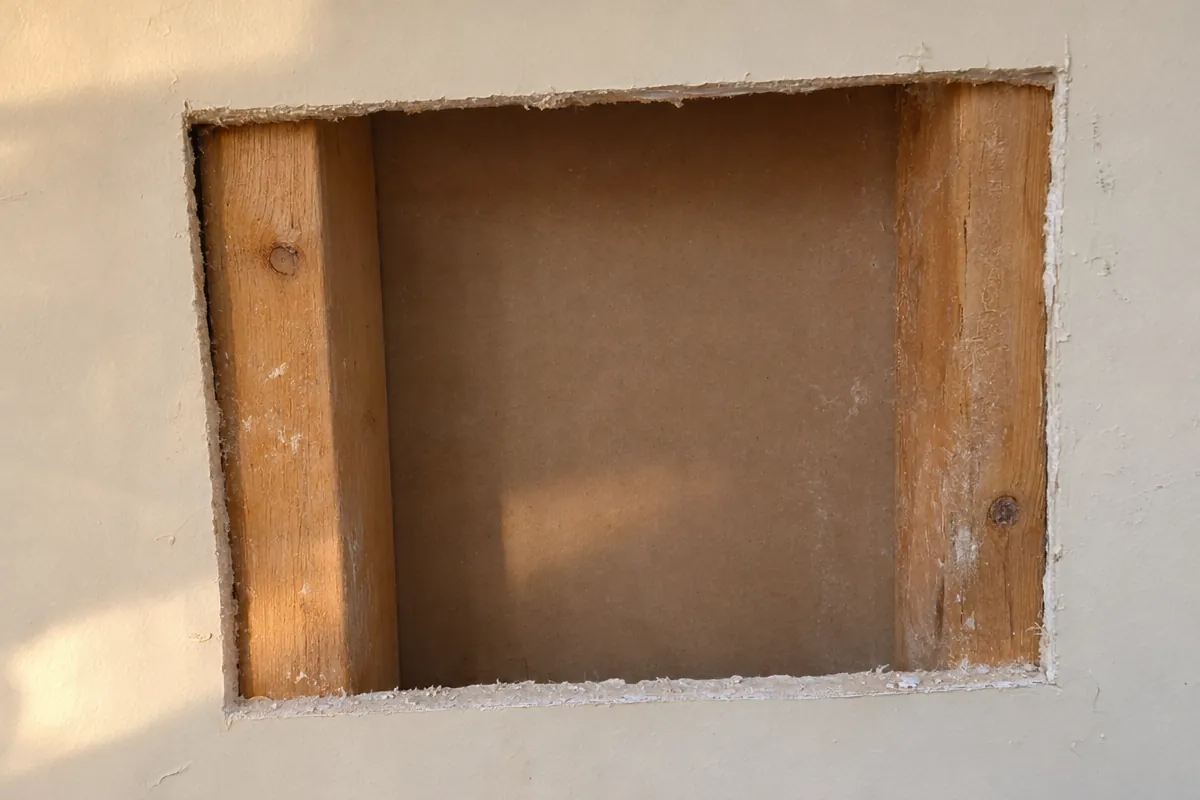
Gypsum board wicks. Water standing on the slab creeps up the panel well past the visible tide mark, and the paper face feeds mold if it stays damp. The standard approach is a flood cut: one level line sliced around the room a margin higher than any spot the meter still flags as damp, with everything below it removed.
That opens up studs, sill plate and insulation. Soaked fiberglass goes. The framing dries and gets verified dry with a moisture reader before anything covers it again. Replacement board, ideally a moisture- and mold-resistant kind in a basement, is set a little above the slab so the next puddle cannot soak into it.
From there it is ordinary finishing: tape, three coats, sanding, primer, with the long level seam feathered broad so it doesn't read as a stripe around the room.
Local
A river town on flat ground
Streator lies along the Vermilion River, a major Illinois River tributary, in country Wikipedia calls mostly flat prairie. Its worst flood came in 1951, with the river at 18 feet. Annual rainfall runs to 34.68 inches, and level ground drains slowly.
That does not mean every basement here leaks. It does put weight on grading, gutters and sump pumps, and it makes a finished lower-level wall worth a look after any big spring storm. A damp, musty smell, paint blistering near the floor or soft baseboards are the first hints.
Rentals add a twist. Census figures for 2020 put Streator's rental vacancy at 12.8%, and a basement shut up between tenants can conceal slow seepage until somebody shifts boxes off the wall.
Questions
Basement drywall FAQ
Is drying it out an option instead of replacing it?
Sometimes. Board that got briefly damp from a small, clean leak and firms back up can stay. Board that sat wet, crumbles, bows or smells musty should go. Anything touched by sewage or floodwater should go no matter what.
How high does the cut need to go?
Above the highest spot where a meter still reads moisture, not merely above the stain. The exact height depends on how far the water climbed.
How long before new board can go up?
Until the framing is dry. Closing wet studs in traps the problem, and that drying stretch is the one piece of the schedule nobody can hurry.
Cost
Basement repair pricing
Fixr's cost page for drywall repair, updated in January 2025, pegs water-damage work in one room between $400 and $800 and puts flood cuts in that same band. That is a national yardstick, not the price of your basement. Wall length, cut height, new insulation, outlet boxes to reset and any painting all change the total.
Related
Other repairs
Check the nearby towns served if you are outside the city. Ready to describe your wall? Use the quote form.
Next step
Scope and quote
Describe the damage. If honestly a tub of spackle would do, that is what you will be told.
A pro close to Streator follows up and tells you plainly how much work the wall needs.